

Why a Real Neighborhood Can Make a Second Home Feel More Like Home
A second home may start as a getaway. The neighborhood around it can be what makes you look forward to returning for reasons that have nothing to do with a vacation itinerary.
When people picture a second home in the Lakes Region, the first images are usually the obvious ones: a summer afternoon near Lake Winnipesaukee, a fall weekend surrounded by foliage, or a winter day at Gunstock.
Those experiences are part of the appeal. But after the first few visits, another question starts to matter: what does it feel like when you are not doing anything special?
Maybe you arrive on a Friday evening with no plans. You take a walk after dinner, see a familiar face, stop to talk for a few minutes, and head home. The next morning, someone is on the pickleball court. Children are at the playground. A neighbor waves as you pass. Nothing about the day would make a travel brochure, but that may be exactly why the place begins to feel different.
For some second-home buyers, a real residential neighborhood can add something a stand-alone vacation property cannot create by itself: familiarity.
A Second Home Can Be a Destination, or It Can Become a Place You Know
There is a difference between recognizing the road to your house and feeling that you belong somewhere.
One study of second-home owners found that social contacts, along with the natural setting and other factors, helped shape attachment to the second-home place. Broader U.S. research points in a similar direction. In a Pew Research Center survey, 77% of adults who said they knew all or most of their neighbors felt attached to their community, compared with 32% of those who said they knew none of their neighbors.
That does not mean every second-home owner wants a busy social calendar. Often, the value is much simpler. It is seeing people you recognize. Knowing who lives nearby. Having casual places to cross paths. Feeling that when you come back after a few weeks away, you are returning to a neighborhood rather than simply reopening a house.
That distinction can be especially meaningful when a second home is somewhere you hope to use for years, bring family to regularly, or perhaps spend more time in later on.
The Homeowners Describe the Neighborhood Before They Describe the Amenities
The recent Lady of the Lakes Estates homeowner interview offers a good example. When Sandra Watson and her daughter, Julie Bath, talked about life in the community, their comments quickly moved beyond the house itself.
“I call this my happy place.”
Sandra Watson
Sandra went on to describe going outside and seeing people in the neighborhood who wave and smile. Julie summed up what stood out to her in just a few words:
“I think it's community.”
Julie Bath
Later in the interview, homeowner Craig Cousins described a similar feeling from his own perspective:
“It's the American neighborhood. It's what you dream of.”
Craig Cousins
Different homeowners are describing the same idea in different ways. The appeal is not simply that other houses are nearby. It is that the neighborhood is beginning to develop its own everyday rhythm.
Watch Sandra and Julie talk about the neighborhood experience and the sense of community they have found at Lady of the Lakes Estates.
Shared Spaces Make It Easier for Familiarity to Happen Naturally
Neighborhood connections rarely come from being told to socialize. They are more likely to grow from repeated, low-pressure encounters.
That is where the community amenities at Lady of the Lakes Estates can matter. Walking trails give residents a reason to be outside. Pickleball courts create an easy opportunity for a game or conversation. The playground gives visiting children, parents, and grandparents a shared place to spend time.
Those features have recreational value on their own, but their location inside the neighborhood gives them another purpose. They create natural places where homeowners can see one another without having to organize a formal event.
For a second-home owner who may be in Laconia only on weekends or for stretches of the summer, those casual encounters can help shorten the distance between being a visitor and becoming a familiar face.
You Can Have a Neighborhood Without Giving Up Your Retreat
Wanting a neighborhood does not necessarily mean wanting constant activity outside your door.
Part of the appeal of the Lady of the Lakes Estates community is the combination of private single-family homes and shared community spaces. Homeowners can spend the morning walking the trails or talking with neighbors, then return to their own yard, porch, deck, or living room when they want quiet time.
That balance can be particularly useful for a second home. Some weekends may be full of family, boating, dinners out, and neighbors stopping to talk. Other visits may be about doing almost nothing. A residential setting can support both.
The goal is not to make every visit social. It is to have the option for connection when you want it.
A Neighborhood Can Make Family Visits Feel Different Too
Second homes often become gathering places. Friends visit. Adult children come for weekends. Grandchildren may begin associating the house with summer vacations, winter trips, and holidays.
Craig talked in the homeowner interview about adding bonus space so friends and family could stay comfortably, and about having a full boat during the summer. That speaks to the house itself, but the neighborhood can become part of those visits too.
A guest can take a walk on the trails. Family members can play pickleball. Children can spend time at the playground. A morning does not always need a planned destination before everyone can get out of the house and do something.
Over time, the memories connected to a second home may include the people next door and the walk around the neighborhood just as much as the larger Lakes Region attractions nearby.
It Can Make Longer Stays Feel More Natural
Many buyers begin with the idea of a weekend or seasonal retreat and later discover that they want to stay longer.
A second home in the Lakes Region can be easier to imagine for extended stays when it sits within a year-round residential setting. Living in Laconia provides the practical side of that equation with shopping, dining, healthcare, local services, and everyday conveniences. The neighborhood adds the human side.
Instead of feeling as though you are occupying a vacation property for a few extra weeks, you can begin developing routines. You recognize the route into town. You know where you like to have lunch. You see the same people while walking. The house gradually becomes connected to a larger sense of place.
That may also matter for buyers who could eventually make New Hampshire a more permanent part of their lives. You are not only choosing where to spend weekends. You may be choosing a community you could grow into.
The Best Way to Evaluate a Second-Home Neighborhood Is on an Ordinary Day
If you are comparing second homes, it is easy to visit on the kind of day that makes every Lakes Region property look appealing.
Try imagining a less remarkable one.
It is Saturday morning and you do not have plans. Do you want somewhere nearby to walk? Could you picture greeting people you know? Is there space for visiting family to get outside without everyone piling into the car? Does the neighborhood feel active enough to be welcoming but quiet enough to remain a retreat?
Those questions can tell you something that square footage, finishes, and proximity to the lake cannot.
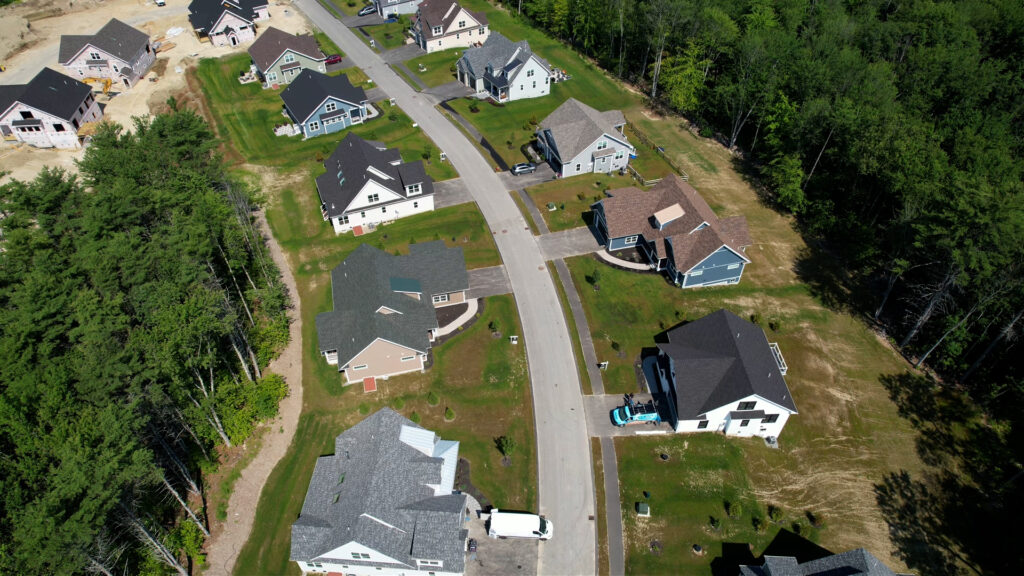
Lady of the Lakes Estates was designed as a residential neighborhood, with single-family homes, walking trails, pickleball courts, a playground, wooded surroundings, and access to the broader Laconia and Lakes Region lifestyle.
For someone choosing a second home in the Lakes Region, that setting offers the possibility of something beyond having a place to stay near the activities you enjoy.
It gives you the chance to return often enough that the house, the familiar faces, and the neighborhood itself all begin to feel like part of home.
You can view available homes or schedule a visit to experience the neighborhood for yourself.